
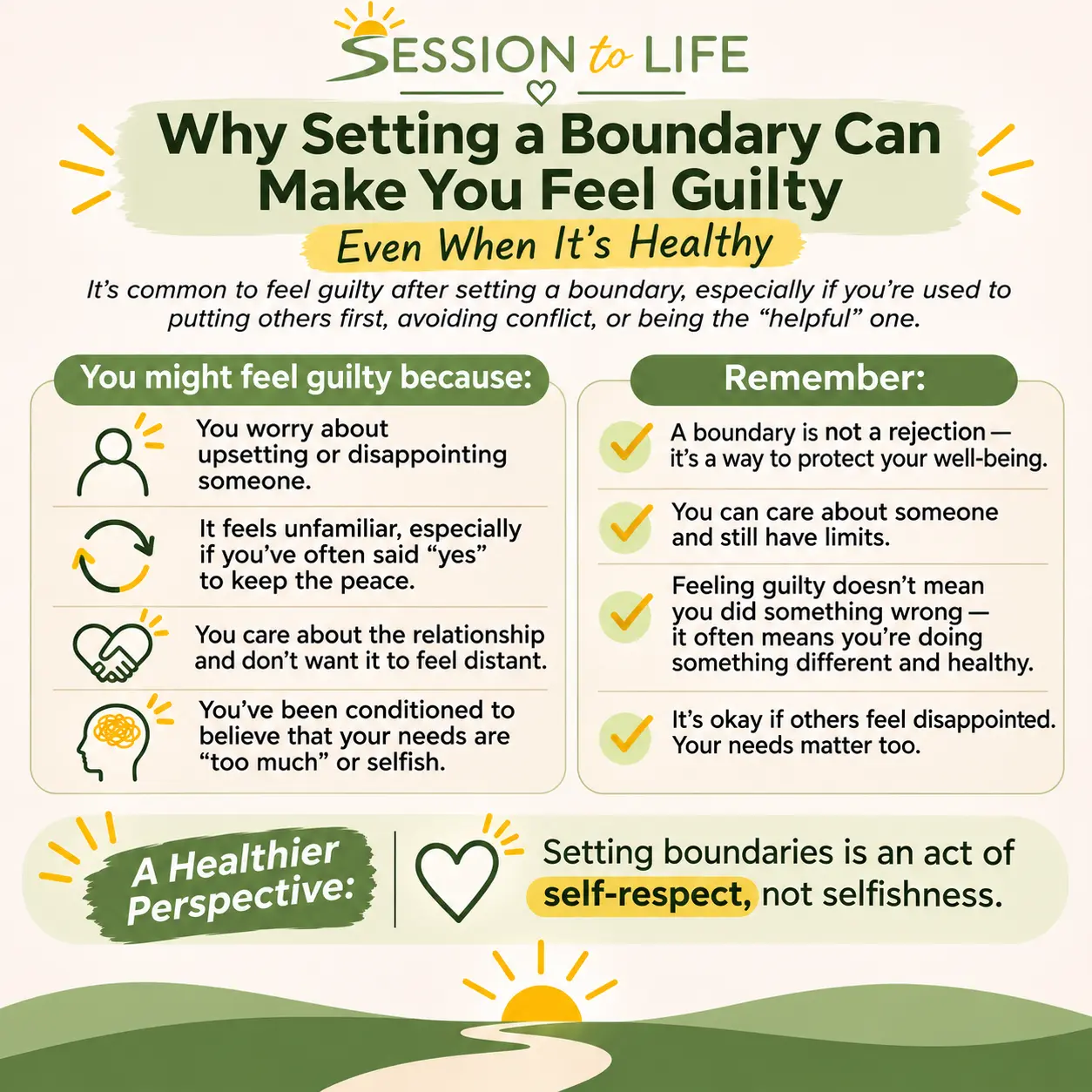
Why Setting a Boundary Can Make You Feel Guilty — Even When It's Healthy
Guilt after a boundary is common, especially if you're used to putting others first. It doesn't mean you did something wrong.
Key ideas
- Guilt often shows up when you do something new, not something wrong.
- A boundary is not a rejection; it protects your well-being.
- Setting boundaries is an act of self-respect, not selfishness.
Why you might feel guilty
You worry about upsetting or disappointing someone. It feels unfamiliar, especially if you've often said yes to keep the peace. You care about the relationship and don't want it to feel distant. Or you've been conditioned to believe your needs are “too much” or selfish.
Remember
You can care about someone and still have limits. Feeling guilty doesn't mean you did something wrong; it often means you're doing something different and healthy. It's okay if others feel disappointed. Your needs matter too.
Riding the wave of guilt
Guilt usually peaks right after the boundary and fades with practice. Instead of taking the boundary back, try naming it: “This is guilt, and it will pass.” Then remind yourself why the boundary matters.
Try this
Think of a boundary you set that left you feeling guilty. Write one sentence reminding yourself what it protected.
Time Boundary Scenario
A coworker asks you to stay late again, but you already feel stretched thin and need to go home.
ReadEnergy Boundary Scenario
Someone wants to keep talking and making plans, but you already feel mentally and physically drained.
Read