
Who Supports the Person Who Supports Everyone?
If you are usually the strong one, letting yourself receive help can feel unfamiliar. Explore what support can look like for helpers—and why you don't always have to be the strong one.
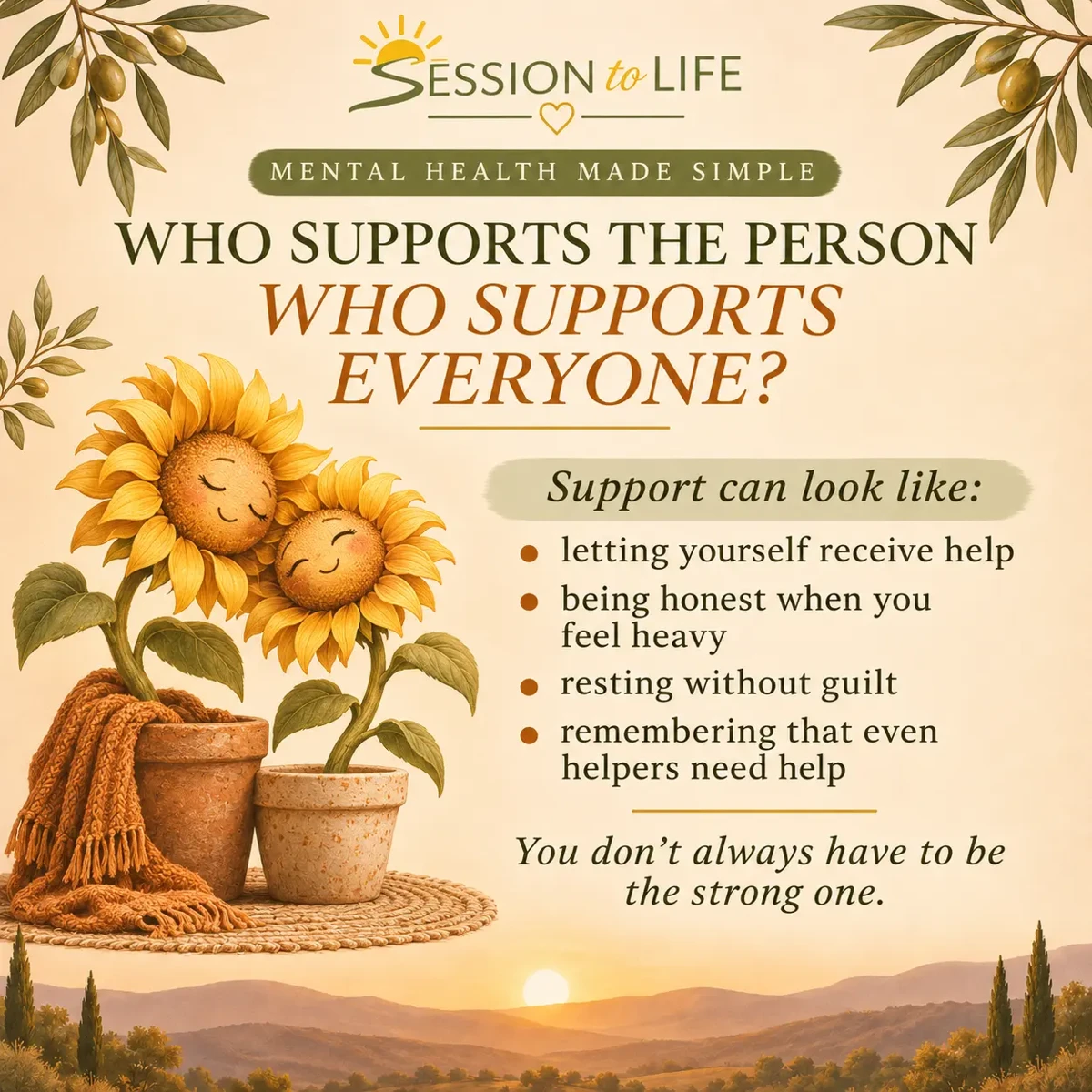
Key ideas
- Even helpers need help; needing support is human, not a weakness.
- Support can look like receiving help, being honest when you feel heavy and resting without guilt.
- You don't always have to be the strong one.
The quiet weight of being “the strong one”
Some people become the one everyone calls—the listener, the problem-solver, the caregiver. Often this role grows from love, family expectations, culture or early experiences of needing to be capable. It can be meaningful, but it can also become lonely when others assume you are always fine. Over time, giving without receiving may show up as exhaustion, irritability, numbness or feeling unseen.
What support can look like
Support can look like letting yourself receive help, being honest when you feel heavy, resting without guilt, and remembering that even helpers need help. It might be accepting a friend's offer to bring dinner, telling someone “I'm not okay today,” or protecting an evening for rest. Receiving care does not cancel your strength; it helps you sustain it.
A real-life example (hypothetical)
Imagine Marisol, the eldest daughter who helps her parents, checks on her siblings and supports coworkers. When a friend asks how she is, she usually says “Good!” This week, she tries something new: “Honestly, I'm tired. Could we just sit and talk?” The conversation is short, but she feels a little less alone. It is a small step, not a complete change—and small steps count.
When extra support may help
If you feel ongoing exhaustion, resentment, hopelessness or difficulty functioning, a qualified mental health professional may help you explore your needs and limits. If you ever feel unsafe or in crisis, in the U.S. call or text 988; outside the U.S., contact local crisis or emergency services. These resources are educational and not a substitute for individualized mental health treatment.
Try this
If it feels comfortable, choose one small way to receive care this week: accept an offer of help, share one honest feeling with someone you trust, or take ten minutes of rest without justifying it. Optional reflection: Who do I support, and who supports me? There is nothing to submit; pause if this feels heavy.
The Story Behind Session to Life: Introducing My First Memoir
By Brenda Guevara Garcia, LCSW. Session to Life began with a belief that conversations about mental health should feel accessible, relatable, and human.
Now in English & Spanish editionsReadDomestic Violence & IPV: Understanding Abuse, Red Flags and Safety Planning
Abuse is a pattern of power and control—not only physical harm. Learn the forms it can take, red flags to notice, and how a personal safety plan can support safety and options.
Read