
When DV/IPV Affects a Family: Partners, Children and Safety
Partner abuse can reach beyond the couple. Learn how children may be affected, which signs need urgent attention, what to know about child welfare, and how support before a crisis can help.
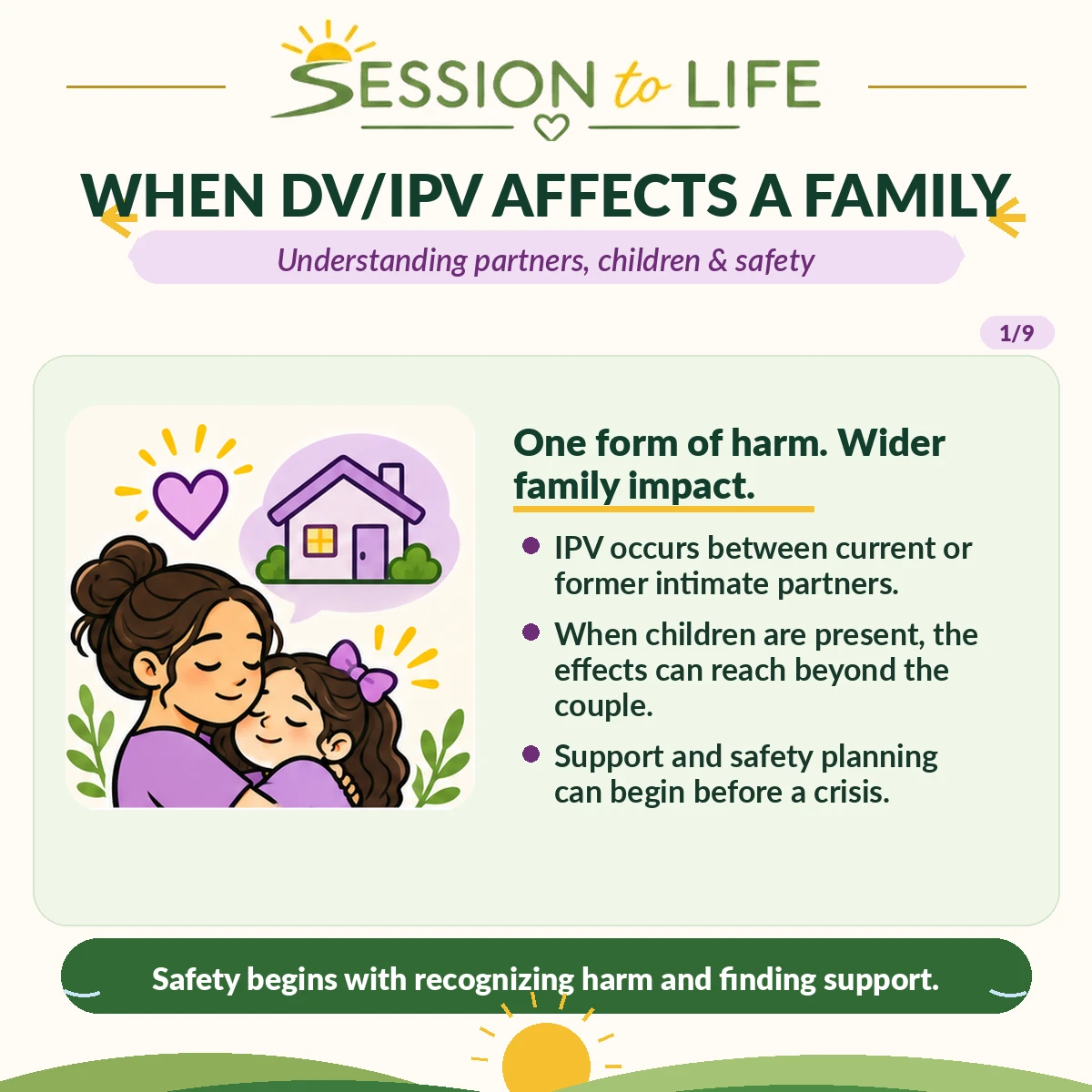
Key ideas
- Children can be affected even if they are never physically struck.
- The abuse is not a child's responsibility; the person using abuse is responsible for stopping it.
- Support and safety planning can begin before a crisis—whether someone stays, leaves or is undecided.
From partners to family
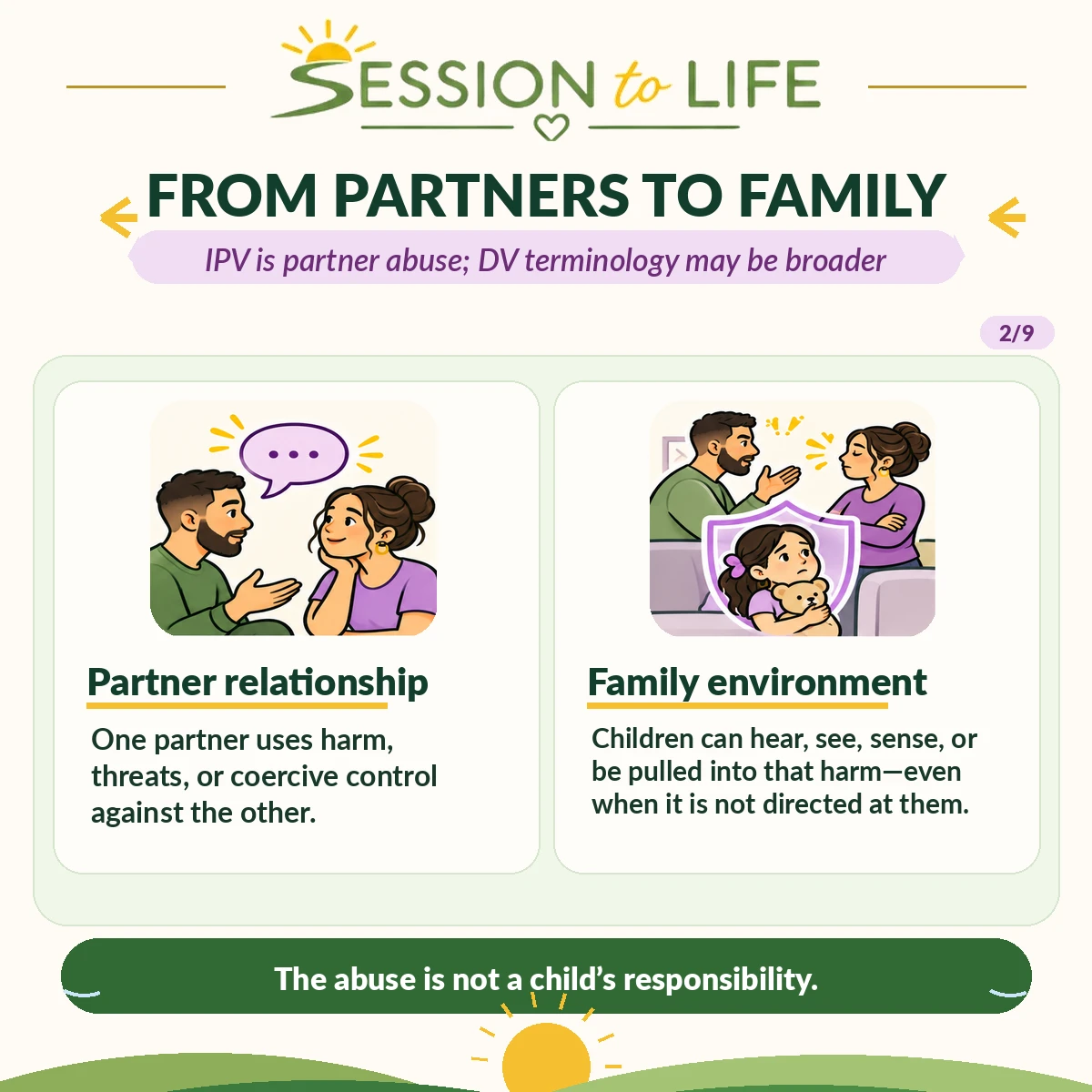
IPV occurs between current or former intimate partners: one partner uses harm, threats or coercive control against the other. The term domestic violence may be broader. When children are present, they can hear, see, sense or be pulled into that harm—even when it is not directed at them. The abuse is never a child's responsibility.
IPV is more than physical violence
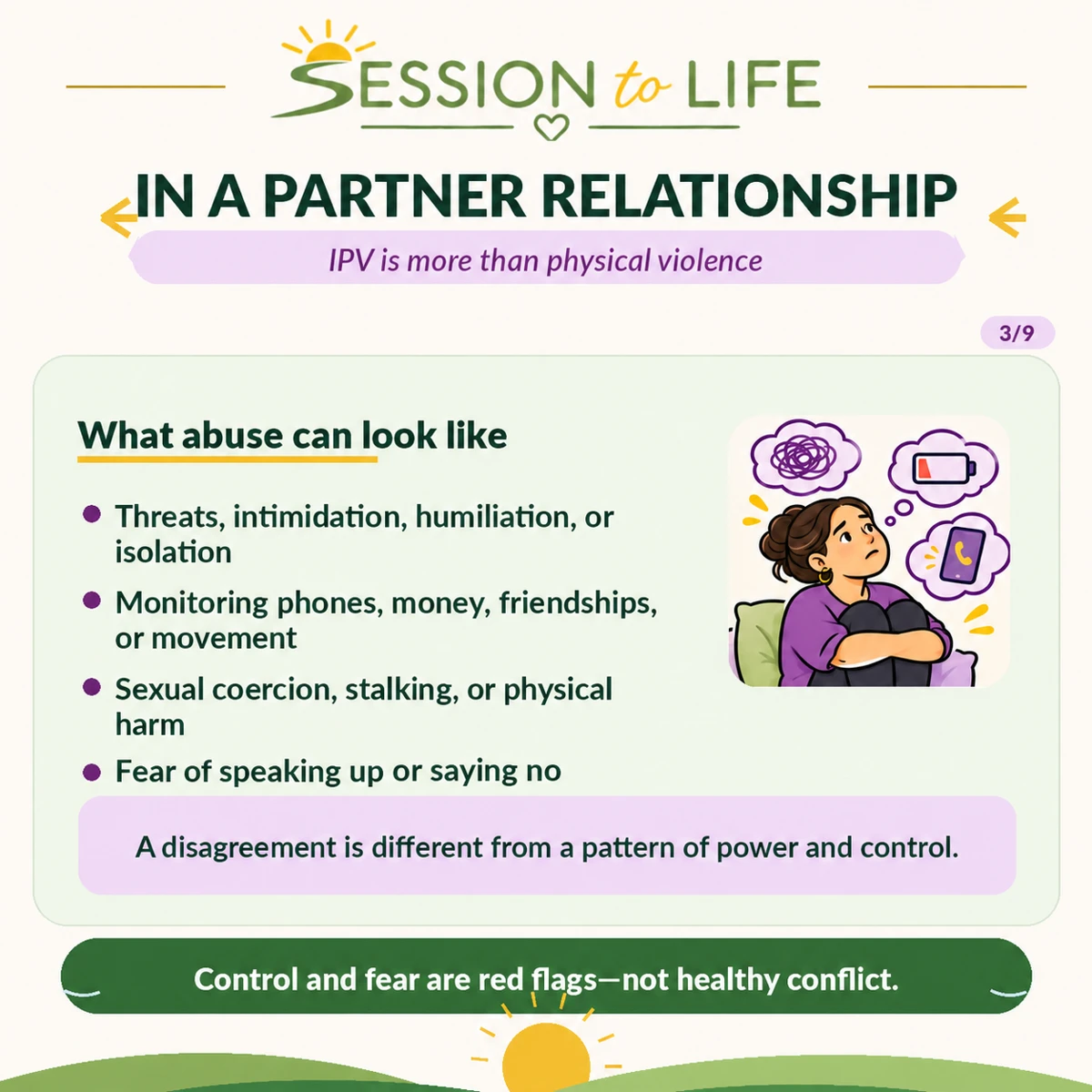
Abuse can look like threats, intimidation, humiliation or isolation; monitoring phones, money, friendships or movement; sexual coercion, stalking or physical harm; and fear of speaking up or saying no. A disagreement is different from a pattern of power and control. Control and fear are red flags—not healthy conflict.
When children are present
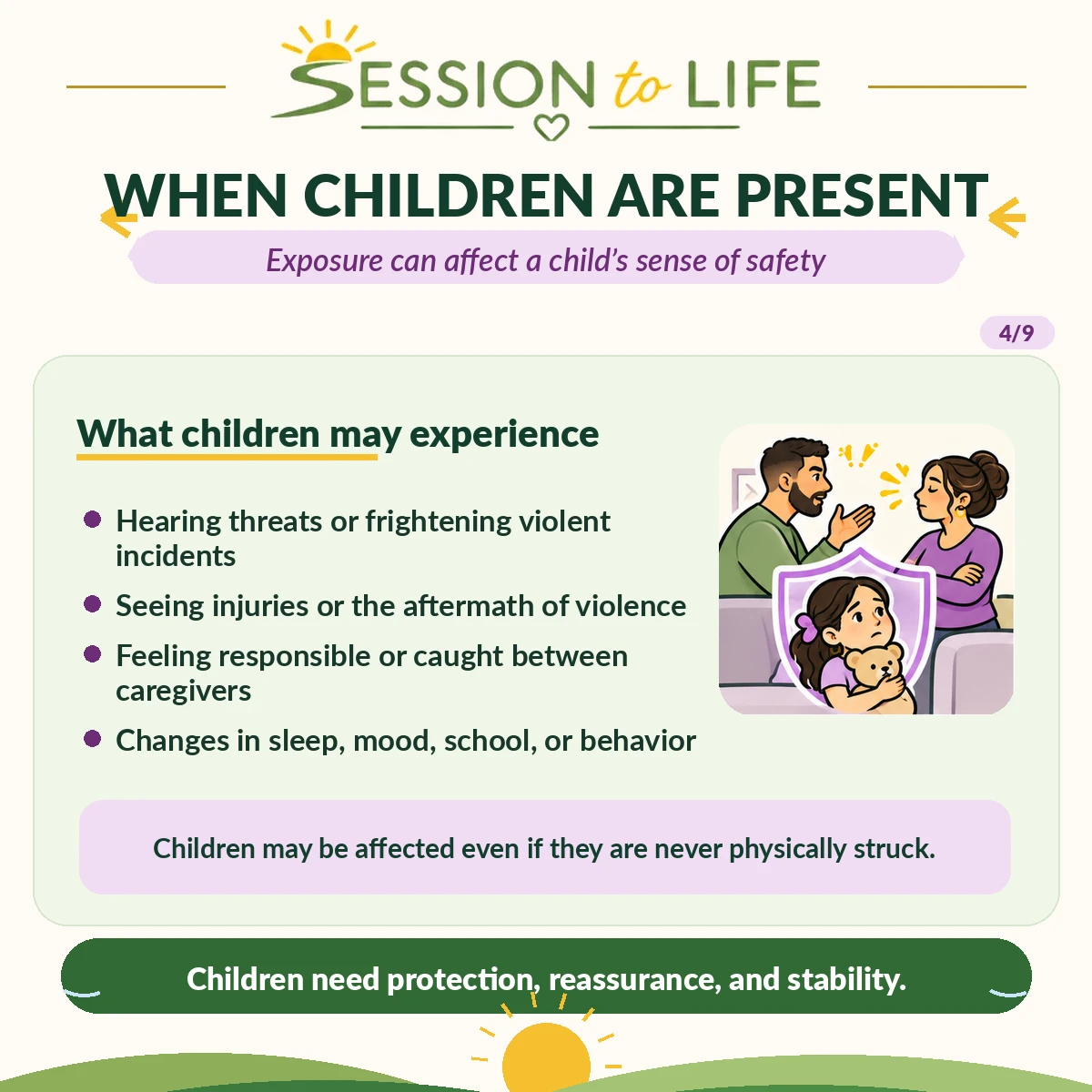
Children may hear threats or frightening incidents, see injuries or the aftermath of violence, feel responsible or caught between caregivers, or show changes in sleep, mood, school or behavior. Each child responds differently. What helps most is protection, reassurance and stability from safe adults.
Signs to take seriously
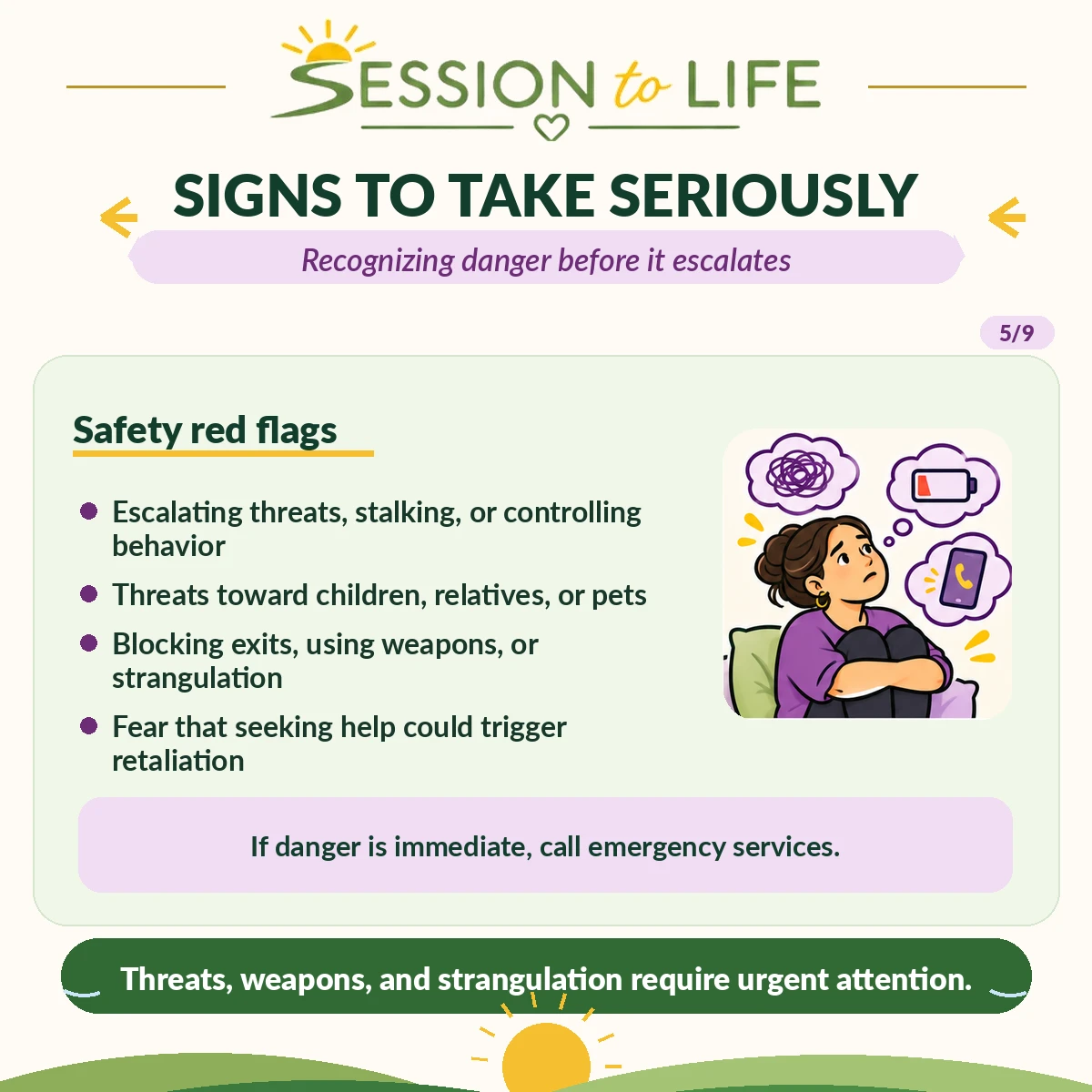
Some signs suggest danger may be escalating: escalating threats, stalking or controlling behavior; threats toward children, relatives or pets; blocking exits, using weapons or strangulation; and fear that seeking help could trigger retaliation. Threats, weapons and strangulation require urgent attention. If danger is immediate, call 911 or local emergency services.
CPS: what to know
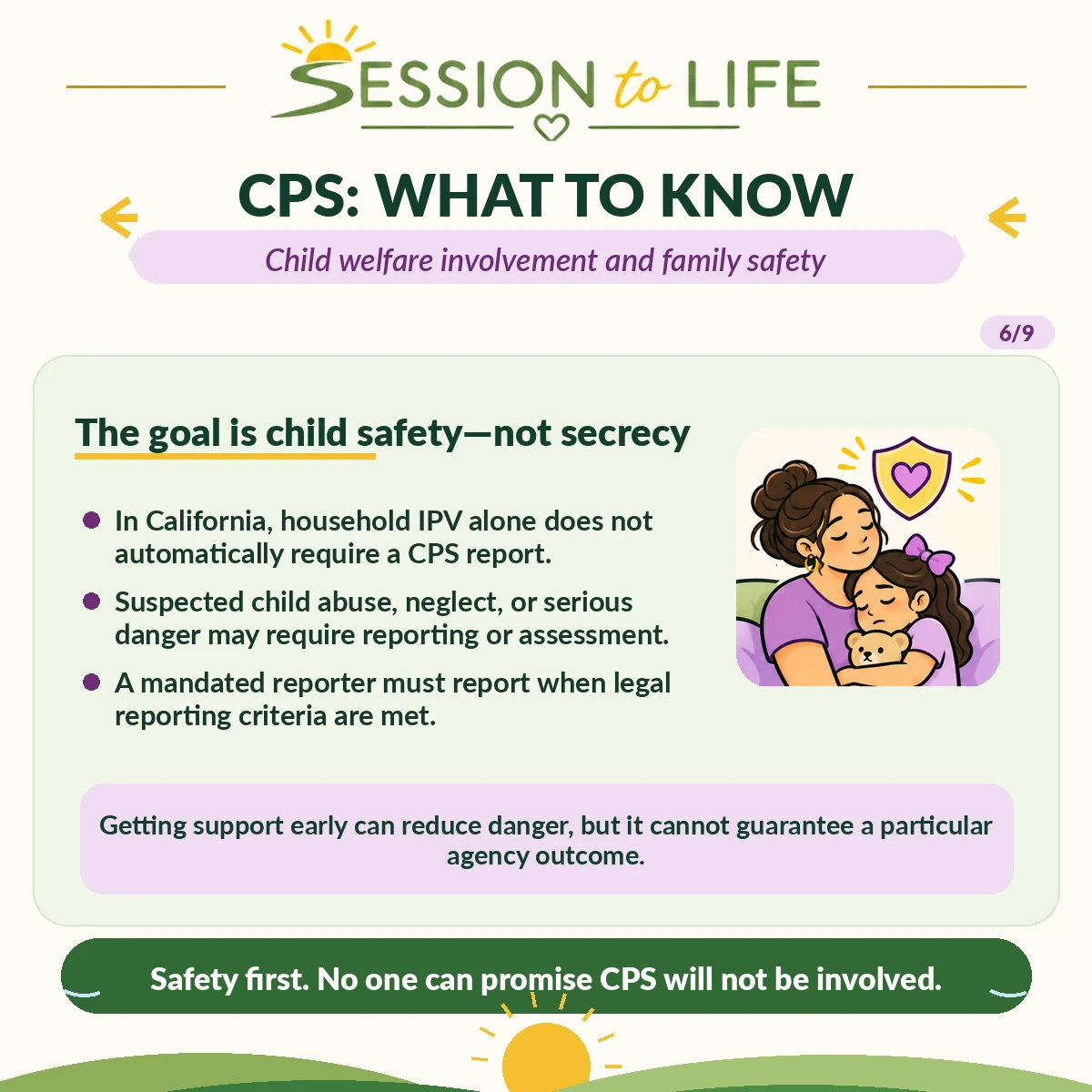
Many parents hesitate to seek help because they fear child welfare involvement. In California, household IPV alone does not automatically require a CPS report. Suspected child abuse, neglect or serious danger may require reporting or assessment, and mandated reporters must report when legal reporting criteria are met. Getting support early can reduce danger, but no one can promise a particular agency outcome. Rules differ by state and country, so ask an advocate about your local situation.
Act early, protect children
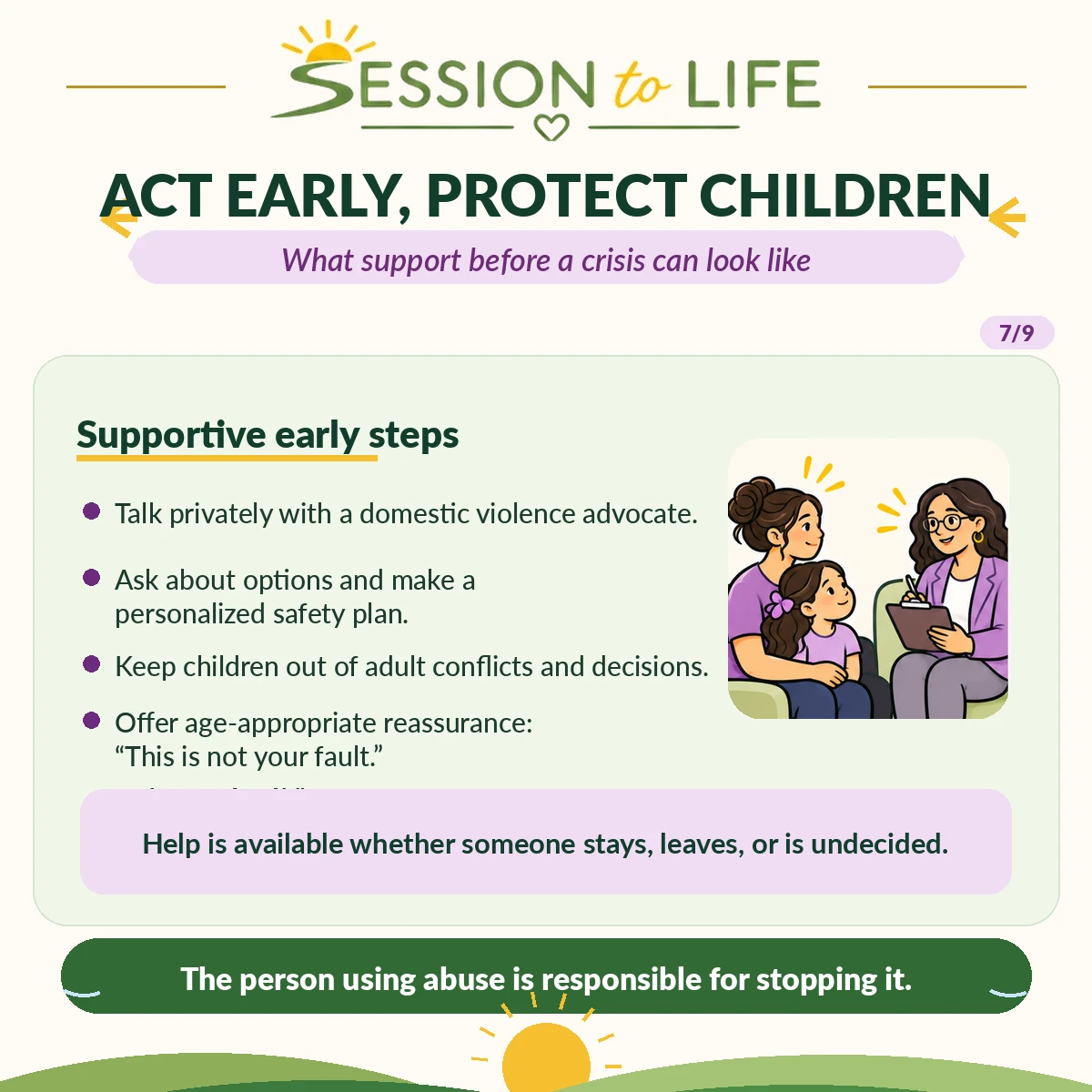
Supportive early steps include talking privately with a domestic violence advocate, asking about options and making a personalized safety plan, keeping children out of adult conflicts and decisions, and offering age-appropriate reassurance such as “This is not your fault.” Help is available whether someone stays, leaves or is undecided. The person using abuse is responsible for stopping it.
A family safety plan
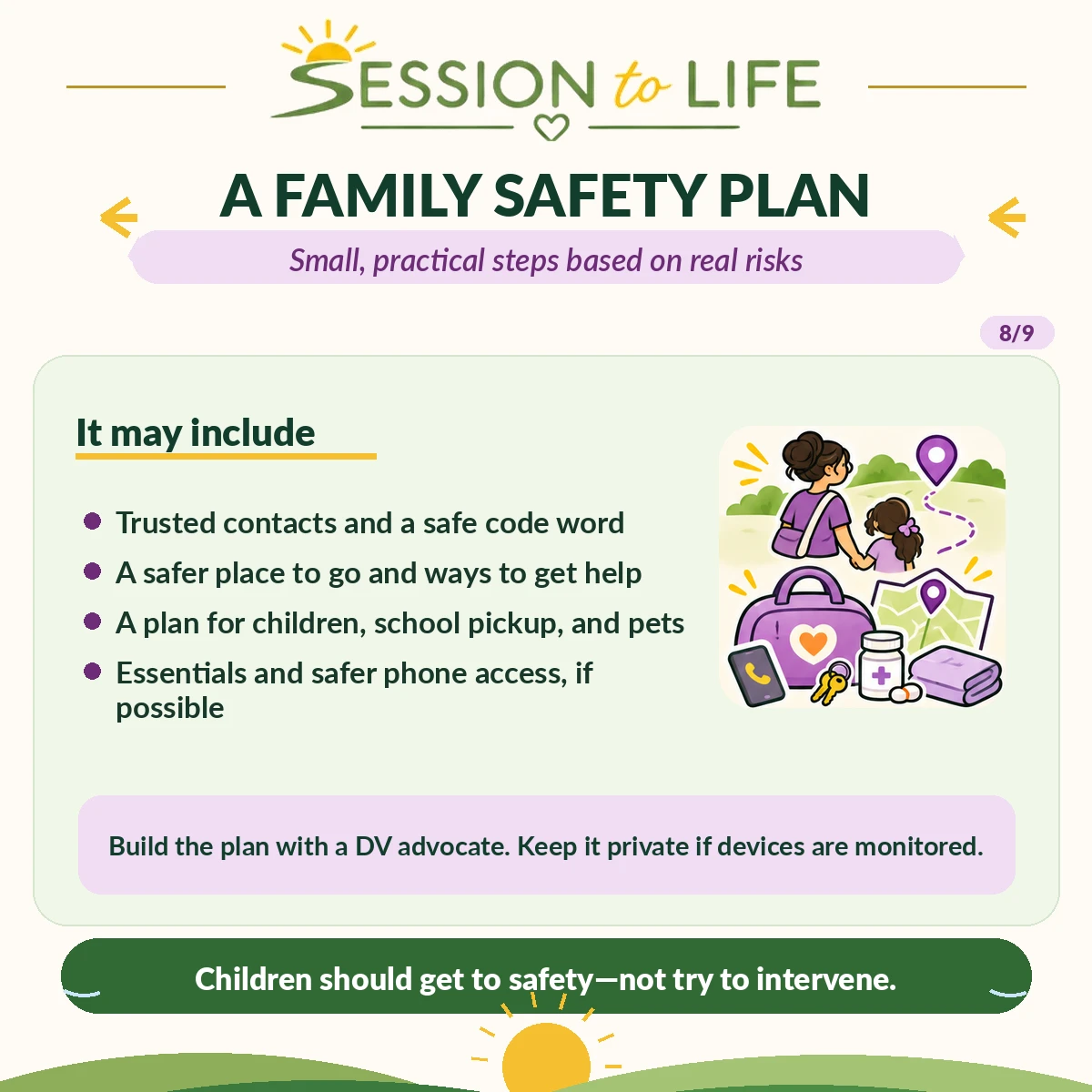
A family safety plan uses small, practical steps based on real risks. It may include trusted contacts and a safe code word, a safer place to go and ways to get help, a plan for children, school pickup and pets, and essentials and safer phone access if possible. Build the plan with a DV advocate, and keep it private if devices are monitored. Children should be taught to get to safety—not to try to intervene.
Support before a crisis
You do not have to navigate this alone. In the U.S., the National Domestic Violence Hotline offers free, confidential support and safety planning 24/7: call 800-799-7233, text START to 88788, or visit TheHotline.org (Spanish available). Use a safer device if your phone or computer may be monitored. In immediate danger, call 911 or local emergency services. Outside the U.S., contact local emergency or domestic violence services. A question to reflect on: what could communities do to make early help feel safer to ask for?
Try this
If you are a parent or caregiver and it feels safe, think of one calm, age-appropriate phrase you could offer a child, such as “You are safe with me, and this is not your fault.” If you are worried about a family you know, consider learning about local DV resources you could gently share. Pause anytime.
The Story Behind Session to Life: Introducing My First Memoir
By Brenda Guevara Garcia, LCSW. Session to Life began with a belief that conversations about mental health should feel accessible, relatable, and human.
Now in English & Spanish editionsReadDomestic Violence & IPV: Understanding Abuse, Red Flags and Safety Planning
Abuse is a pattern of power and control—not only physical harm. Learn the forms it can take, red flags to notice, and how a personal safety plan can support safety and options.
Read