
Power Dynamics in Marriage and Parenting
How patterns of influence and control between partners shape the way children are raised.
Key ideas
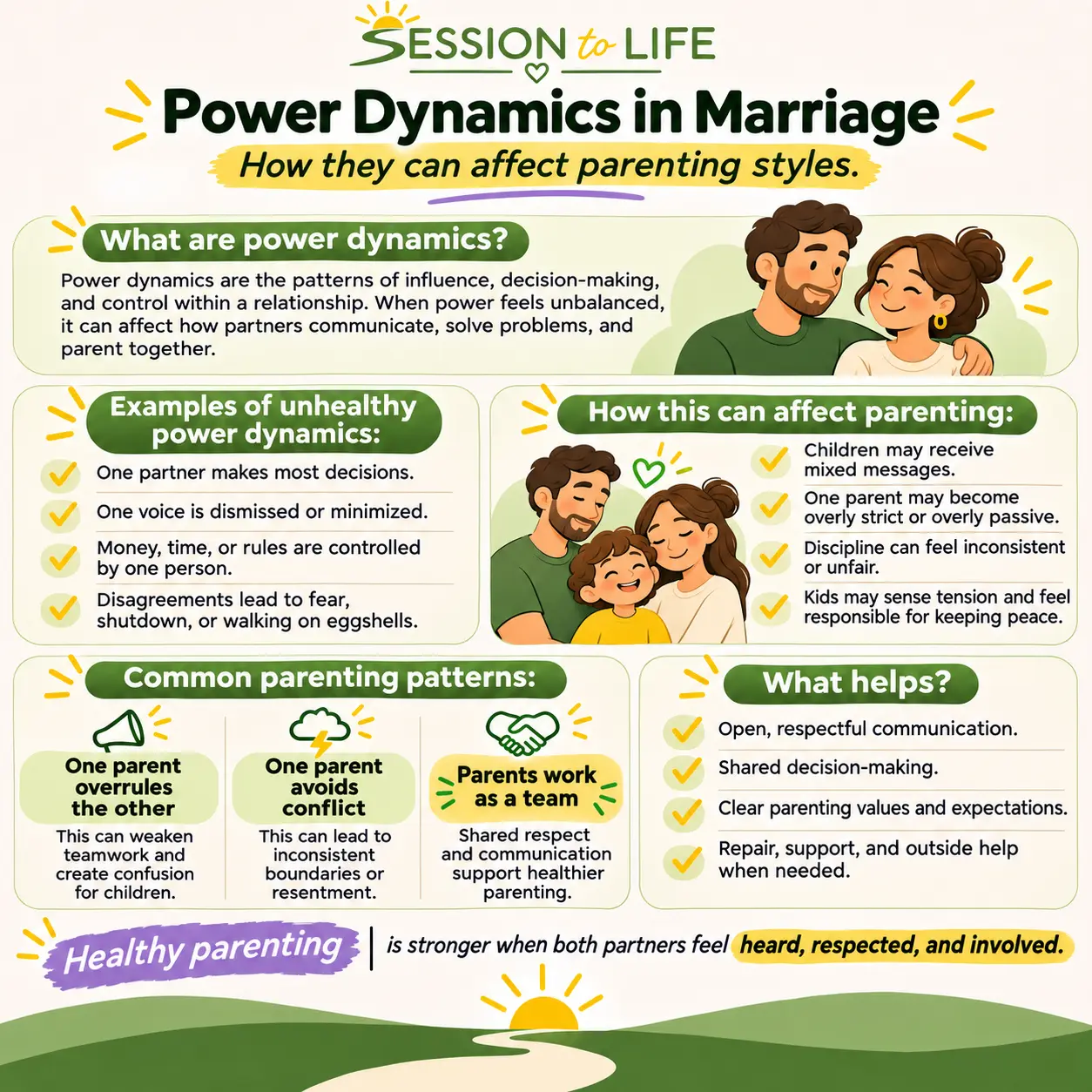
- Power dynamics are patterns of influence, decision-making and control.
- Imbalance can lead to mixed messages and inconsistent discipline.
- Children are best supported when both parents feel heard and involved.
Signs of an unhealthy balance
One partner makes most decisions. One voice is dismissed or minimized. Money, time or rules are controlled by one person. Disagreements lead to fear, shutdown or walking on eggshells. If you feel unsafe with your partner, please reach out to a domestic violence hotline or a professional.
How it shows up with children
Children may get mixed messages. One parent may become overly strict while the other becomes passive. Discipline can feel inconsistent or unfair, and kids may sense tension and try to keep the peace. Common patterns: one parent overrules the other, which weakens teamwork; or one avoids conflict, which leads to resentment.
What helps
Open, respectful communication. Shared decision-making. Agreeing on parenting values and expectations before conflicts arise. Repair after disagreements, and outside support like couples counseling when needed.
Try this
With your partner, choose one parenting rule you both agree on, and decide together how you'll back each other up on it.
Time Boundary Scenario
A coworker asks you to stay late again, but you already feel stretched thin and need to go home.
ReadEnergy Boundary Scenario
Someone wants to keep talking and making plans, but you already feel mentally and physically drained.
Read