
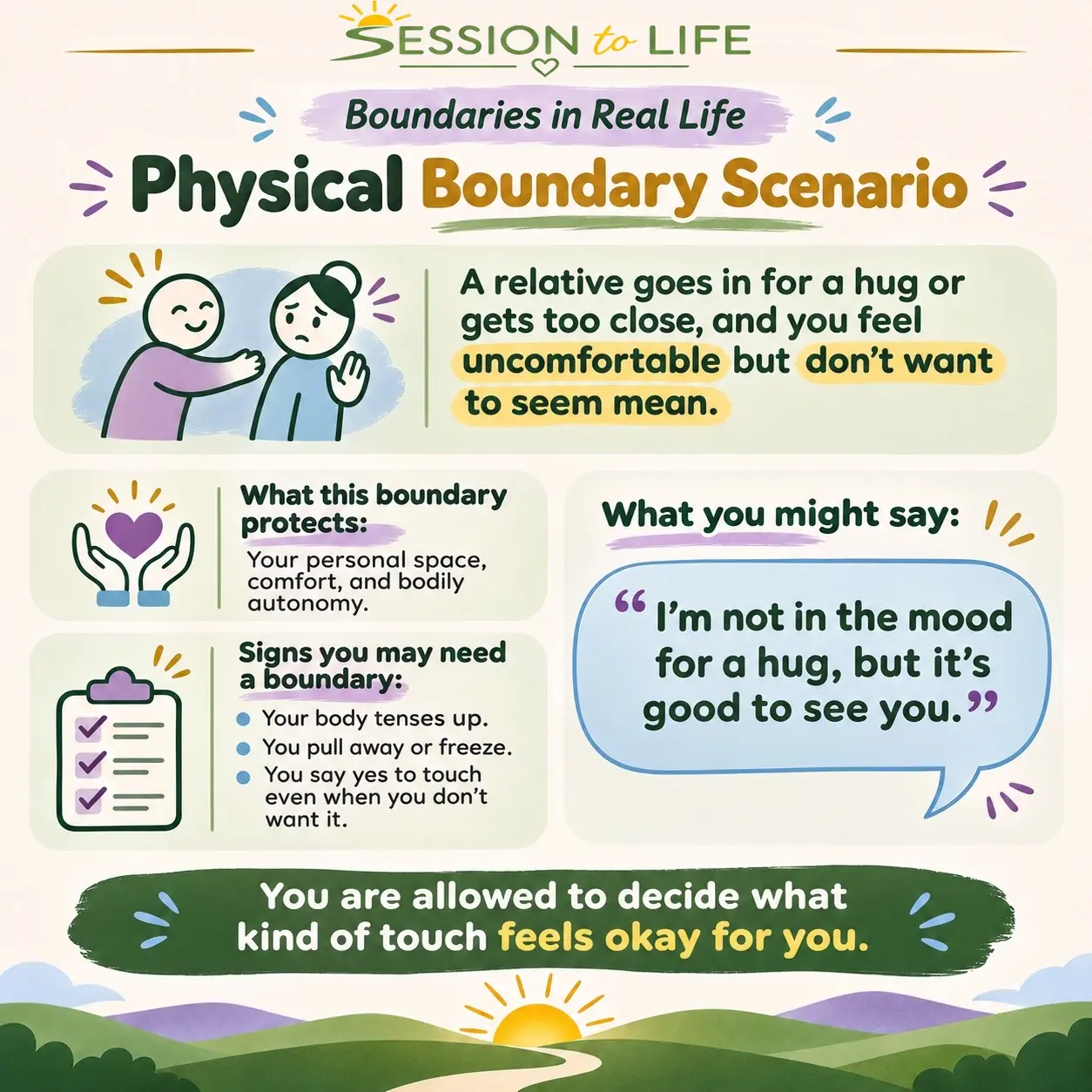
Physical Boundary Scenario
A relative goes in for a hug or gets too close, and you feel uncomfortable but don't want to seem mean.
Key ideas
- What this boundary protects: your personal space, comfort and bodily autonomy.
- Signs you may need it: your body tenses up, you pull away or freeze, or you say yes to touch even when you don't want it.
- You are allowed to decide what kind of touch feels okay for you.
Why this can feel hard
With family, touch is often tied to love and respect, and saying no can feel like rejecting the person. For people with a history of trauma, unwanted touch can feel especially overwhelming.
What you might say
“I'm not in the mood for a hug, but it's good to see you.” Offering a wave, smile or handshake keeps the warmth while protecting your space.
Read more
For more on this with family and children, see “Physical Boundaries in Latino Culture” in the resource library.
Try this
Decide your preferred greeting ahead of time, and practice saying your sentence once out loud.
Time Boundary Scenario
A coworker asks you to stay late again, but you already feel stretched thin and need to go home.
ReadEnergy Boundary Scenario
Someone wants to keep talking and making plans, but you already feel mentally and physically drained.
Read